※ 스포일러 포함 리뷰 (Spoiler-included review)
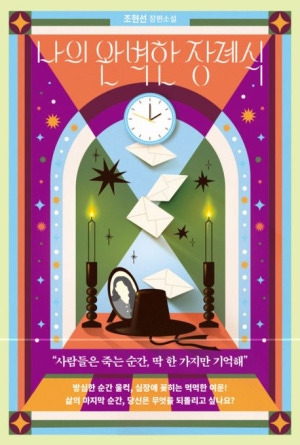
"사람들은 죽는 순간, 딱 한 가지만 기억해."
(“People remember only one thing at the moment of death.”)
이 한 문장은 소설의 시작이자 마지막을 관통하는 질문처럼 다가온다.
(This single sentence feels like a question that runs through the beginning and the end of the story.)
나의 완벽한 장례식은 종합병원 장례식장 옆 작은 매점을 배경으로 펼쳐진다.
(My Perfect Funeral unfolds in a small convenience store next to a hospital funeral hall.)
삶과 죽음이 매일 스쳐 가는 새벽 두 시, 스무 살 나희는 이승을 떠나지 못한 손님들의 마지막 주문을 받아 적는다.
(At two in the morning, where life and death pass each other, twenty-year-old Nahee writes down the final requests of customers who cannot leave this world.)
그녀의 일은 누군가의 마지막을 '완벽하게' 마무리하는 것이다.
(Her role is to “perfectly” complete someone’s final moments.)
줄거리 — 장례식장 매점에서 시작된 여섯 번의 이별 (Plot Summary — Six Farewells That Begin in a Funeral Hall Store)
대학 등록금을 벌기 위해 시작한 야간 아르바이트는 예상치 못한 손님들을 불러온다.
(A night shift job to pay tuition brings unexpected visitors.)
그들은 그림자가 없고, 매점에 없는 물건을 찾거나 이해하기 어려운 부탁을 남긴다.
(They have no shadows and ask for items that do not exist in the store.)
독자는 점차 깨닫게 된다.
(The reader slowly realizes the truth.)
그들이 이미 죽었거나 죽음을 앞둔 존재라는 사실을.
(They are either already dead or standing at the edge of death.)
소설은 다섯 명의 마지막 소원과 한 명의 정체 모를 청년 이야기를 교차시키며 전개된다.
(The novel alternates between five final wishes and the story of a mysterious young man.)
반려묘를 두고 떠난 사람, 치매 아내를 지키고 싶었던 남편, 세상과 단절된 고등학생, 깊은 한을 품은 노인, 그리고 희귀병을 안고 서른까지 살아낸 청년.
(A person who left behind a beloved cat, a husband who wished to protect his wife with dementia, an isolated high school student, an old man with hidden resentment, and a young man who survived a rare illness until thirty.)
그들의 소원은 거창하지 않다.
(Their wishes are not grand.)
그러나 그 사소함이야말로 한 사람의 생을 가장 정확히 설명한다.
(Yet that simplicity describes a life more truthfully than anything else.)
결말 해석 — 완벽한 장례식의 진짜 의미 (Ending Analysis — The True Meaning of a Perfect Funeral)
이 작품에서 장례식은 단순한 의식이 아니다.
(In this story, a funeral is not merely a ritual.)
그것은 남겨진 마음을 제자리로 돌려놓는 과정에 가깝다.
(It is closer to a process of returning unsettled hearts to their rightful place.)
다른 사람들의 마지막을 정리해 주는 동안, 나희는 결국 자신의 상처와도 마주하게 된다.
(While helping others conclude their final moments, Nahee is forced to confront her own wound.)
그 상처는 미처 정리하지 못한 이별에서 비롯된다.
(That wound comes from a farewell she has never fully resolved.)
제목 속 '나의'는 타인의 죽음이 아닌, 결국 자신의 마지막을 가리킨다.
(The word “my” in the title ultimately points not to others’ deaths, but to her own ending.)
완벽한 장례식이란 화려한 추모나 많은 조문객이 아니다.
(A perfect funeral is not about a grand memorial or countless mourners.)
마지막 순간, 스스로 부끄럽지 않은 단 하나의 기억을 붙드는 일이다.
(It is about holding onto one memory that you are not ashamed of at the very end.)
결말은 큰 반전 대신 정서적 수렴을 선택한다.
(The ending chooses emotional convergence over dramatic twists.)
강렬한 충격 대신 조용한 여운이 오래 남는다.
(Instead of shock, it leaves behind a quiet and lasting resonance.)
책을 덮고 나면 자연스럽게 질문이 남는다.
(After closing the book, a question naturally lingers.)
나는 죽는 순간 무엇을 붙잡고 싶을까.
(What would I want to hold onto at the moment of my death?)
총평 — 죽음을 통해 삶을 묻는 소설 (Final Thoughts — A Novel That Questions Life Through Death)
장례식장과 귀신이라는 설정에도 불구하고 작품의 정서는 공포보다 위로에 가깝다.
(Despite its setting of funerals and spirits, the tone leans closer to comfort than fear.)
사건보다 관계에 집중하며 삶의 의미를 되묻는다.
(It focuses on relationships rather than events, asking again what life truly means.)
자극적인 반전보다 잔잔한 여운을 좋아하는 독자에게 어울린다.
(It suits readers who prefer gentle afterthoughts over shocking twists.)
이 소설은 죽음을 이야기하지만, 결국 지금을 더 잘 살아보라고 말한다.
(Though it speaks of death, it ultimately encourages us to live the present more fully.)
ⓒ 2026 달빛 모찌 / 무단도용·불펌 금지
© 2026 Dalbit Mochi / No unauthorized use or reproduction
#나의완벽한장례식 #조현선 #한국소설 #한국장편소설 #북로망스 #힐링소설 #판타지소설 #감성소설 #장례식소설 #줄거리요약 #결말해석 #책리뷰 #독서기록 #여운있는소설 #눈물나는책 #삶과죽음 #소설추천 #한국소설추천