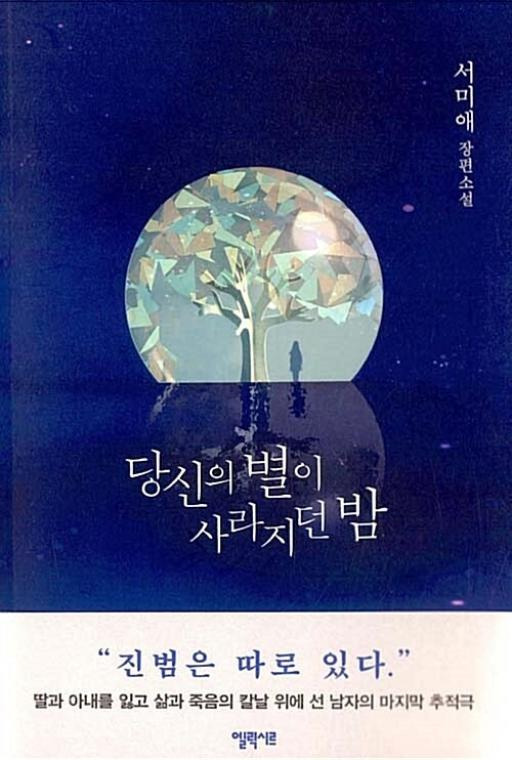
정해연 소설을 좋아하는데 결이 비슷한 걸 찾다 보니 알게 된 책이다.
(I enjoy Jung Hae-yeon's novels, and I came across this book while looking for something with a similar feel.)
이 글에는 스포일러가 포함되어 있습니다.
(This post contains spoilers.)
스포일러를 원하지 않는 분들은 주의해 주세요.
(If you'd rather avoid spoilers, please proceed with caution.)
서미애의 장편소설 <당신의 별이 사라지던 밤>은 딸과 아내를 차례로 잃은 한 남자가 묻혀 있던 진실을 추적해 나가는 이야기다.
(Seo Mi-ae's novel The Night Your Star Disappeared follows a man who, after losing both his daughter and his wife, sets out to uncover a buried truth.)
단순한 추리소설이라기보다, 가해자가 미성년자일 때 사회와 법은 어디까지 책임을 물을 수 있는가를 끊임없이 질문하는 작품이다.
(Rather than a simple mystery novel, it continually asks how far society and the law can hold someone accountable when the perpetrator is a minor.)
진범은 따로 있다, 한 줄의 메모(The Real Culprit Is Someone Else: A One-Line Note)
이야기의 중심에는 우진이라는 인물이 있다.
(At the center of the story is a man named Woojin.)
3년 전 사건으로 딸을 잃은 우진은 깊은 상실감 속에서 하루하루를 버텨 나간다.
(Having lost his daughter in an incident three years earlier, Woojin endures each day under deep grief.)
그러던 중 아내마저 갑작스럽게 세상을 떠나면서 삶의 의미를 잃은 듯한 시간을 보내게 된다.
(Then his wife suddenly passes away as well, leaving him in a time that feels stripped of meaning.)
모든 것을 잃었다고 생각한 순간, 누군가가 우진에게 "진범은 따로 있다"라는 한 줄의 메모를 남긴다.
(Just as he believes he has lost everything, someone leaves Woojin a note reading, "The real culprit is someone else.")
우진은 그 메모를 단서 삼아 이미 끝난 줄 알았던 3년 전 사건을 다시 파헤치기 시작한다.
(Using that note as his only clue, Woojin begins digging back into a case he thought was long closed.)
미성년자라는 이름 뒤에 가려진 책임(Responsibility Hidden Behind the Word "Minor")
우진의 추적이 이어질수록 사건의 새로운 진실이 조금씩 드러난다.
(As Woojin's investigation continues, new truths about the case gradually come to light.)
특히 딸의 죽음과 관련된 가해자들이 미성년자였다는 사실은 작품이 던지는 가장 중요한 문제의식 중 하나다.
(The fact that those responsible for his daughter's death were minors is one of the central questions the novel raises.)
소설은 미성년자 범죄에 대한 처벌과 책임의 범위를 이야기하며 독자에게 여러 질문을 던진다.
(The novel raises a number of questions for the reader by examining the scope of punishment and responsibility for crimes committed by minors.)
우진은 법이 대신 해결해 주지 못한 책임의 문제를 직접 마주하기로 결심한다.
(Woojin decides to confront, on his own, the question of responsibility that the law failed to resolve.)
그리고 그 과정에서 사건을 둘러싼 다양한 사람들의 모습과 마주하게 된다.
(In doing so, he comes face to face with the many people surrounding the case.)
침묵하는 사람들 (People Who Stay Silent)
이 소설에는 여러 형태의 침묵이 등장한다.
(The novel features silence in many different forms.)
자신의 안위를 위해 사건을 외면한 사람, 진실을 알고 있으면서도 침묵한 사람, 그리고 자신의 슬픔에 갇혀 다른 사람의 아픔을 보지 못한 사람까지 등장인물들은 저마다 다른 이유로 침묵을 선택한다.
(Some turn away from the case for their own safety, some stay silent despite knowing the truth, and others are too trapped in their own grief to see anyone else's pain — each chooses silence for a different reason.)
우진은 사건과 관련된 한 인물과 함께 진실을 추적하며 흩어져 있던 퍼즐 조각들을 하나씩 맞춰 나간다.
(Woojin teams up with one person connected to the case, and together they piece together the scattered fragments of the truth.)
그 과정은 단순히 범인을 찾는 이야기가 아니라, 책임과 양심에 대한 이야기로 확장된다.
(This process becomes less about finding the culprit and more a story about responsibility and conscience.)
작가의 말이 남긴 인상(What the Author's Note Leaves Behind)
마지막 페이지에는 작가가 이 소설을 쓰게 된 계기가 담겨 있다.
(The final page contains the reason the author came to write this novel.)
작가는 세월호 희생자의 방을 담은 사진에서 큰 인상을 받았고, 그 경험이 작품을 구상하는 계기 중 하나가 되었다고 이야기한다.
(The author says she was deeply moved by a photograph of a room belonging to a Sewol ferry victim, and that experience became one of the starting points for conceiving this novel.)
이를 통해 자녀를 잃은 부모의 상실감과 남겨진 사람들의 슬픔에 대해 깊이 고민하게 되었음을 엿볼 수 있다.
(This shows how deeply she reflected on the loss felt by parents who lose a child, and on the grief of those left behind.)
그래서인지 소설 속 우진의 분노와 무력함은 단순한 허구처럼 느껴지지 않는다.
(Perhaps because of this, Woojin's anger and helplessness in the novel never feel like mere fiction.)
남겨진 사람의 고통이 얼마나 오래 지속되는지, 그리고 사회는 그 고통을 얼마나 쉽게 잊어버리는지 생각하게 만든다.
(It makes the reader think about how long the pain of those left behind can last, and how easily society forgets it.)
마무리 감상 (Closing Thoughts)
<당신의 별이 사라지던 밤>은 통쾌한 범인 찾기보다 남겨진 사람의 슬픔과 사회의 침묵에 더 오래 머무는 소설이다.
(The Night Your Star Disappeared lingers far longer on the grief of those left behind and society's silence than on the satisfaction of catching a culprit.)
가해자가 미성년자라는 이유로 책임이 가벼워질 수 있는 현실, 그리고 그 현실 앞에서 침묵을 선택한 어른들의 모습은 읽는 내내 묵직한 여운을 남긴다.
(The reality that responsibility can be lightened simply because the perpetrator is a minor, and the adults who choose silence in the face of that reality, leave a heavy impression throughout the book.)
작가의 말까지 읽고 나면 이 작품이 던지는 질문은 단순한 소설 속 이야기에 그치지 않는다.
(By the time you reach the author's note, the questions this novel raises no longer feel confined to fiction.)
진실을 외면하지 않는다는 것은 무엇인지, 책임은 어디까지 이어져야 하는지 생각하게 만드는 작품이었다.
(It is a novel that makes you think about what it truly means not to turn away from the truth, and how far responsibility should extend.)
ⓒ 2026 달빛 모찌 / 무단도용·불펌 금지
© 2026 Dalbit Mochi / No unauthorized use or reproduction
#당신의별이사라지던밤 #서미애 #장편소설 #소설추천 #한국소설 #추리소설 #스릴러소설 #책리뷰 #독서기록 #북리뷰 #책추천 #독서후기