월요일 아침은 유독 피곤하다.
(Monday mornings feel especially exhausting.)
한 주가 빠르게 지나고 또 돌아온 월요일ㅡ
(Another week has flown by, and Monday is here again.)
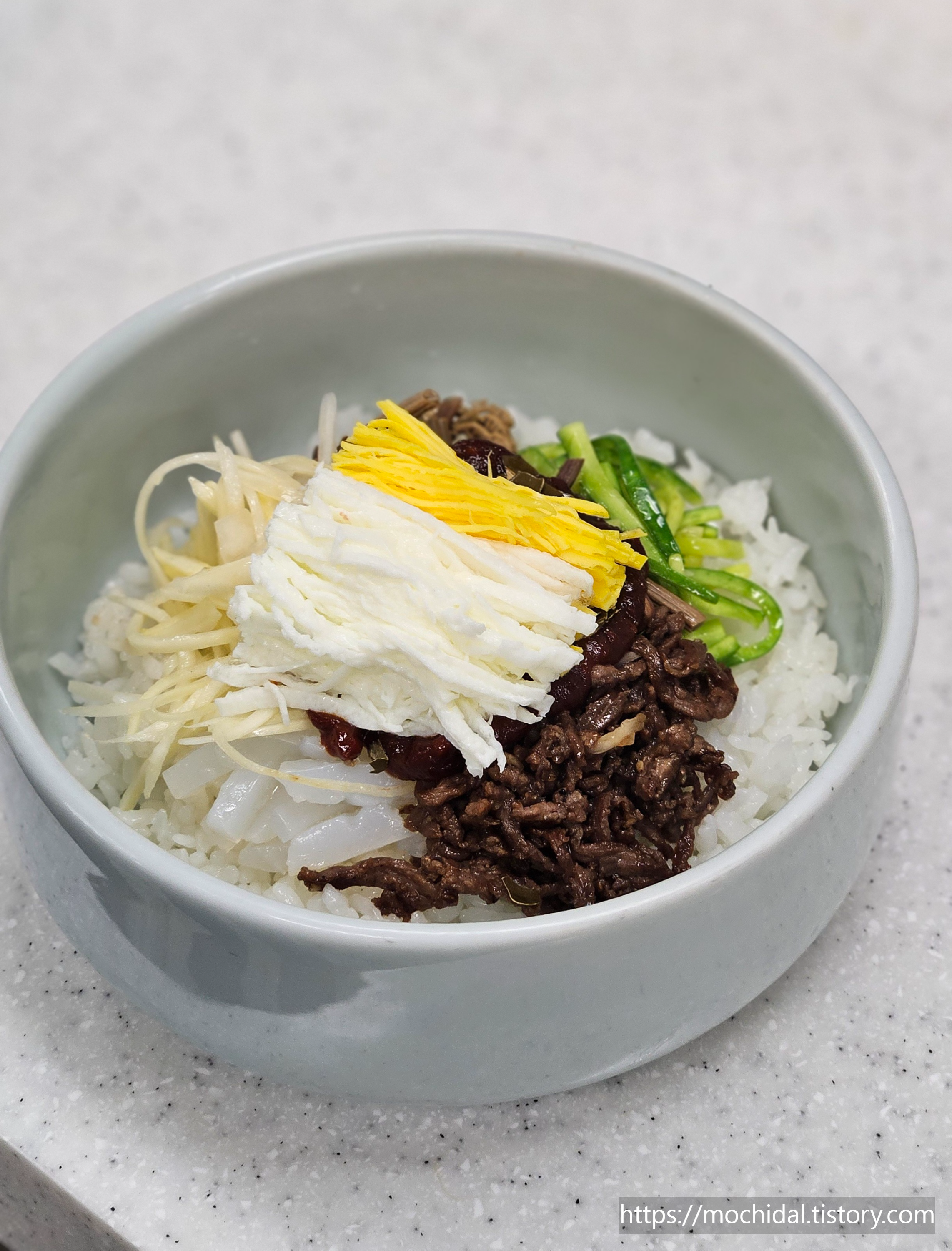
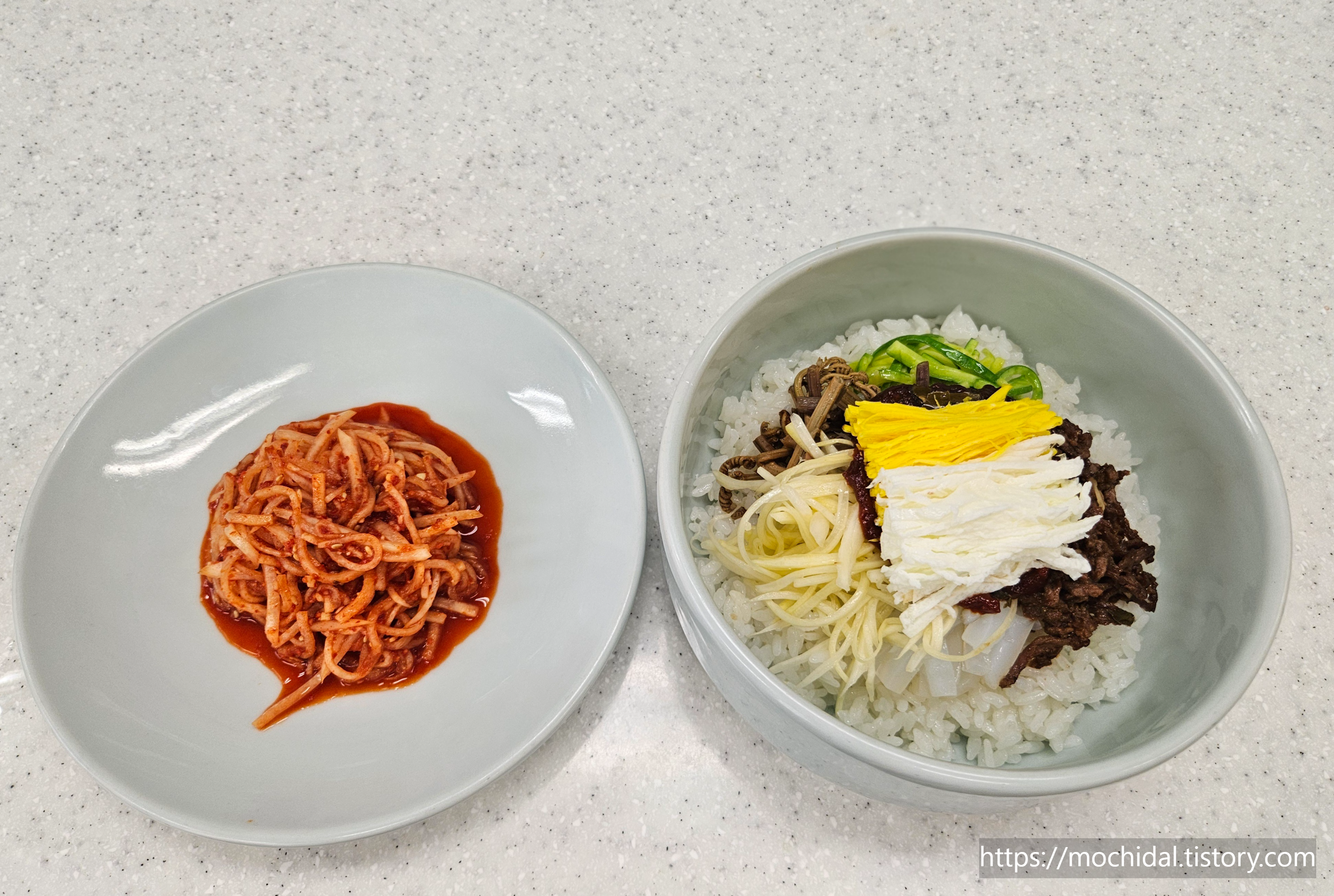
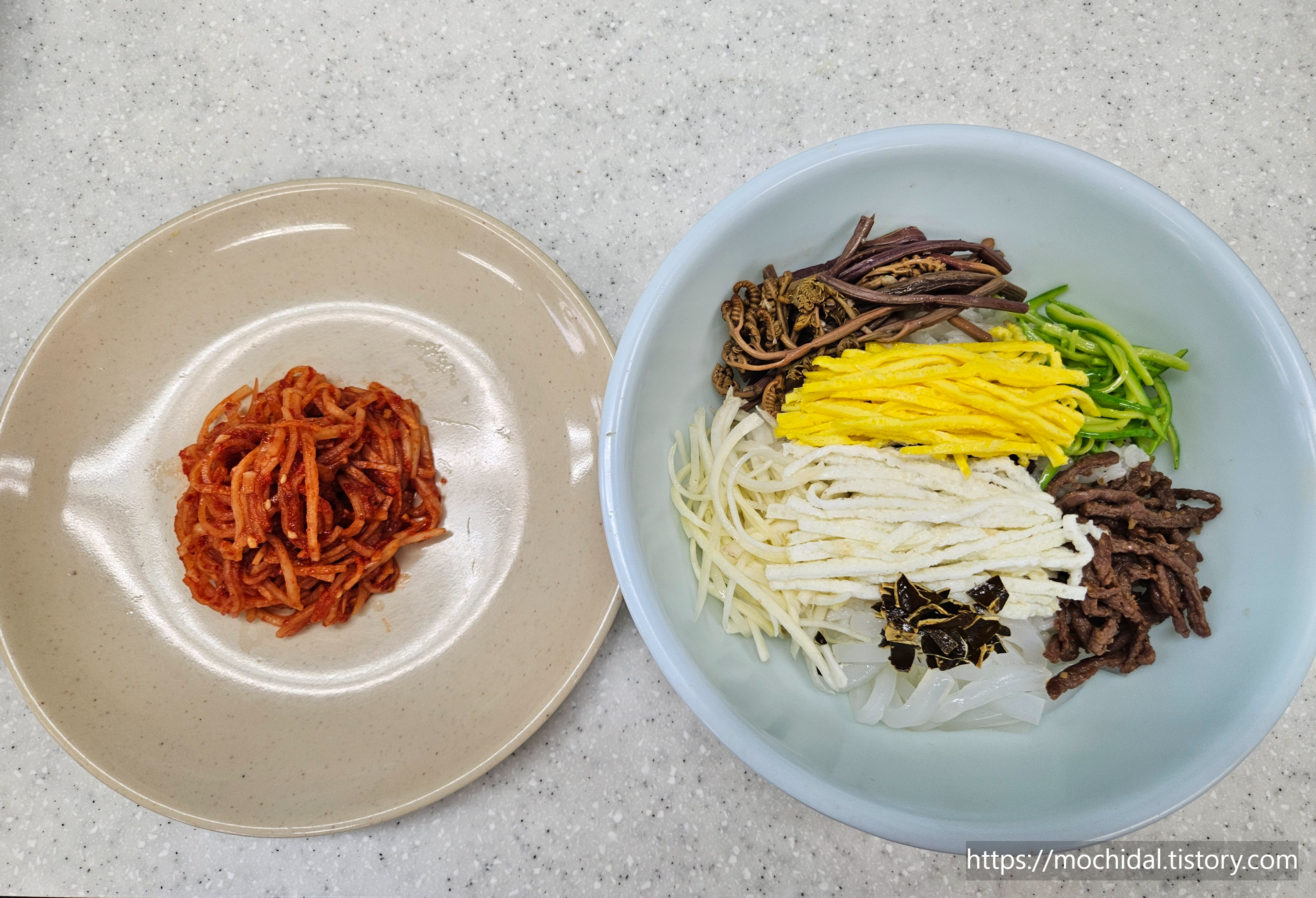
오늘 실습 메뉴는 비빔밥과 무생채였다.
(Today's practical training menu was bibimbap and musaengchae.)
비빔밥 (Bibimbap)
요구사항부터 정리해봤다.
(Let me start by going over the requirements.)
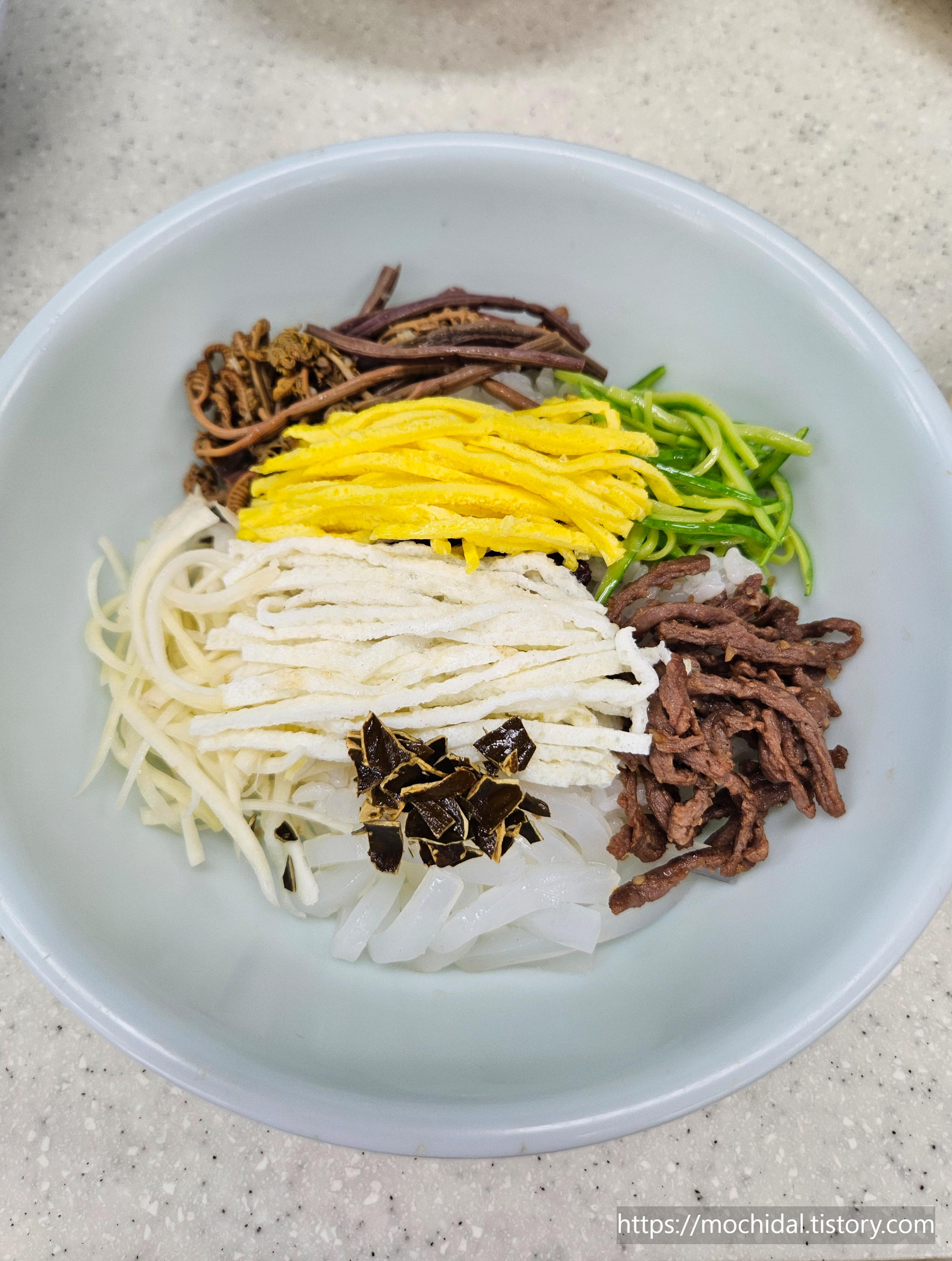
- 채소, 소고기, 황·백 지단의 크기는 0.3×0.3×5cm로 썰 것
(Vegetables, beef, and yellow/white egg garnish should be cut to 0.3×0.3×5cm.) - 호박은 돌려깎기하여 0.3×0.3×5cm로 썰 것
(Zucchini should be peeled by rotating and cut to 0.3×0.3×5cm.) - 청포묵의 크기는 0.5×0.5×5cm로 썰 것
(Mung bean jelly should be cut to 0.5×0.5×5cm.)
소고기는 고추장 볶음과 고명에 모두 사용할 것
(Beef should be used both in the stir-fried gochujang and as a garnish.) - 담은 밥 위에 준비된 재료들을 색 맞추어 돌려 담을 것
(Arrange the prepared ingredients in a color-balanced circular pattern over the rice.) - 볶은 고추장은 완성된 밥 위에 얹어 낼 것
(Place the stir-fried gochujang on top of the finished dish before serving.)
포인트 (Key Points)
다시마를 튀길 때 기름을 2큰술 넣어 튀기고, 남은 기름은 다른 재료 볶을 때 활용한다.
(When frying the dried kelp, use 2 tablespoons of oil, then use the remaining oil to stir-fry other ingredients.)
약고추장을 볶을 때는 다진 고기를 양념하여 볶다가 고추장, 설탕, 물을 잘 섞어 타지 않게 부드럽게 만드는 것이 핵심이다.
(For the seasoned gochujang, the key is to stir-fry the seasoned minced beef first, then mix in gochujang, sugar, and water carefully so it doesn't burn.)
나물과 고명은 가장자리에 밥이 보이도록 색을 맞춰 조화롭게 담아야 한다.
(Vegetables and garnishes should be arranged with color coordination, leaving the edges of the rice visible.)
실수 사례 (Common Mistakes)
- 약고추장을 태우는 경우
(Burning the seasoned gochujang.) - 다시마를 물에 적시거나 튀길 때 태우는 경우
(Getting the kelp wet or burning it while frying.) - 시간 초과
(Going over the time limit.) - 밥을 태우는 경우
(Burning the rice.)
요구사항도, 포인트도, 실수 사례도 많은 만큼 손이 많이 가는 까다로운 메뉴다.
(With so many requirements, key points, and potential mistakes, this is a demanding dish that requires a lot of hands-on work.)
각각의 고명을 따로 양념하고, 황·백 지단도 만들고, 냄비밥도 짓고, 약고추장도 볶아야 하니 할 일이 정말 많았다.
(Seasoning each garnish separately, making the egg garnishes, cooking the rice in a pot, and stir-frying the gochujang — there was so much to do.)
콩나물밥 실습 때 냄비밥을 해봐서인지 이번엔 그때보다 밥은 잘 지어진 것 같다.
(Having practiced pot rice during the kongnamul bap session, the rice turned out better this time.)
그런데 약고추장을 너무 볶아버려서 물을 추가하고 다시 작업해야 했고, 마무리 직전에 다시마를 빼먹을 뻔했다.
(However, I over-cooked the gochujang and had to add water and redo it, and I nearly forgot to include the kelp right before finishing.)
그리고 가장자리에 밥이 살짝 보이면서 가운데로 재료가 수북이 모이도록 담아야 했는데, 그 부분이 잘 안 됐다.
(The ingredients were also supposed to be mounded toward the center with the rice showing along the edges — that part didn't go as planned.)
아쉬움이 많이 남는 완성이었다.
(It was a finish that left a lot to be desired.)
무생채 (Musaengchae_Spicy Radish Salad)
무생채는 간단하다. 그래서 더 어렵다.
(Musaengchae is simple. That's exactly what makes it harder.)
보이는 게 전부라 감출 게 없기 때문이다.
(What you see is all there is — there's nothing to hide behind.)
요구사항 (Requirements)
- 무는 0.2×0.2×6cm로 썰어 사용할 것
(Radish should be cut to 0.2×0.2×6cm.) - 생채는 고춧가루를 사용할 것
(Use gochugaru (red pepper flakes) for the salad.) - 무생채는 70g 이상 제출할 것
(The finished musaengchae must weigh at least 70g.)
포인트 (Key Points)
무는 길이대로 넓게 썰어, 칼을 무에 대고 밀어가면서 고르게 채 써는 것이 좋다.
(Cut the radish lengthwise into wide slices, then julienne evenly by pressing the knife against the radish and pushing forward.)
색채는 손끝으로 가볍게 살살 무쳐야 싱싱하고 좋으며, 담을 때는 국물이 들어가지 않도록 한다.
(Toss gently with your fingertips to keep it crisp and fresh, and make sure no liquid gets into the serving dish.)
식초와 설탕의 균형이 맛을 좌우하며, 미리 무쳐두면 물이 생기므로 반드시 내기 직전에 무쳐야 한다.
(The balance of vinegar and sugar defines the taste, and since the radish releases water when dressed, it must be tossed right before serving.)
만드는 법 (How to Make It
1. 무를 0.2×0.2×6cm 크기로 고르게 채 썬다.
(Julienne the radish evenly to 0.2×0.2×6cm.)
2. 파, 마늘, 생강을 곱게 다진다.
(Finely mince the green onion, garlic, and ginger.)
3. 고춧가루를 체에 한 번 내려 무에 잘 무쳐 붉게 물을 들인다.
(Sift the gochugaru through a strainer, then toss with the radish until evenly coated in red color.)
설탕, 소금 순서로 넣고 고루 무친 후 식초, 다진 파·마늘·생강, 깨소금을 넣어 간을 맞춘다.
(Add sugar then salt in order, toss evenly, then finish with vinegar, minced aromatics, and sesame salt to taste.)
실수 사례 (Common Mistakes
- 썰어진 무의 크기가 불균일한 경우
(Uneven sizing when cutting the radish.) - 채 썬 무에 양념장을 따로 만들어 한꺼번에 버무리는 경우
(Making a separate seasoning sauce and mixing it in all at once.) - 생강즙을 사용하지 않거나 참기름을 첨가하는 경우
(Omitting ginger juice or adding sesame oil.)
오늘 나의 실수는 고춧가루가 덩어리진 것, 고춧가루를 너무 많이 넣어 색이 지나치게 진해진 것, 그리고 채를 조금 더 두껍게 썰어야 했는데 얇게 썰어버린 것이었다.
(My mistakes today were: the gochugaru clumped together, I used too much so the color came out too dark, and I cut the radish too thin when it needed to be slightly thicker.)
다음엔 고춧가루는 반드시 체에 내리고, 양을 조금 더 조절해봐야겠다.
(Next time, I'll make sure to sift the gochugaru without fail and be more careful with the amount.)
ⓒ 2026 달빛 모찌 / 무단도용·불펌 금지
© 2026 Dalbit Mochi / No unauthorized use or reproduction
#한식조리기능사 #한식조리기능사실기 #조리기능사실기 #비빔밥 #무생채 #비빔밥만들기 #약고추장 #한식실기준비 #조리기능사공부 #한식조리기능사독학 #실기일지 #요리자격증 #위례일상 #결국나의이야기


