이 글에는 스포일러가 포함되어 있습니다.
(This post contains spoilers.)
스포일러를 원하지 않는 분들은 주의해 주세요.
(Please be cautious if you'd prefer to avoid spoilers.)
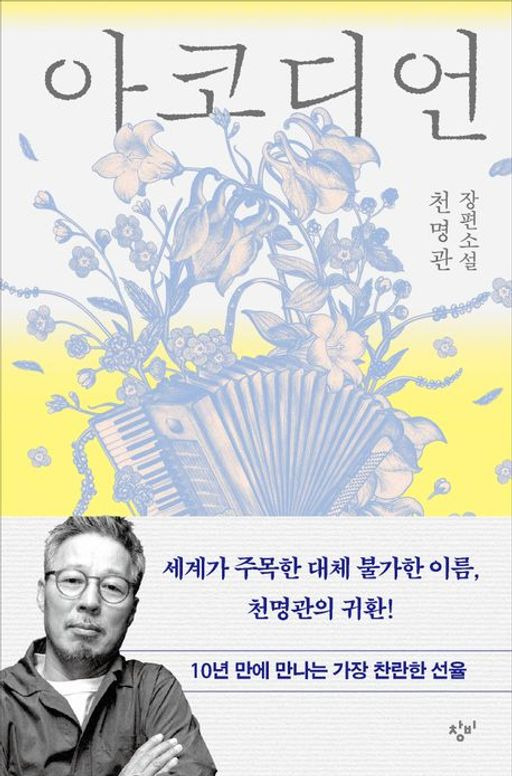
요즘 읽을 만한 한국소설을 찾다가 천명관 작가의 신작 장편소설 <아코디언>을 읽었다.
(While looking for a good Korean novel to read these days, I read Cheon Myeong-kwan's new full-length novel, "Accordion.")
<고래>로 워낙 강렬한 인상을 남긴 작가라 신작 소식이 반가웠는데, 이번 작품은 <고래>와는 상당히 다른 결의 소설이었다.
(Since he left such a powerful impression with "The Whale," I was glad to hear about his new work, but this novel turned out to have quite a different tone from "The Whale.")
작품 배경 (The Setting of the Novel)
<아코디언>은 한국전쟁이 끝난 직후인 1950년대 서울을 배경으로 한다.
("Accordion" is set in Seoul in the 1950s, right after the Korean War ended.)
전쟁은 끝났다고 하지만 거리에는 여전히 굶주림과 폭력, 가난이 남아 있고 부모를 잃은 아이들은 보호받지 못한 채 거리로 내몰린다.
(Although the war was said to be over, hunger, violence, and poverty still remained in the streets, and children who had lost their parents were pushed out onto the streets without protection.)
그 중심에 있는 인물이 바로 소년 동이다.
(At the center of this story is a boy named Dong-i.)
천명관 작가는 이번 작품에서 판타지나 과장된 상상력보다는 전쟁 직후 사회의 폭력과 부조리를 정면으로 바라보는 리얼리즘에 가까운 이야기를 펼쳤다.
(In this work, Cheon Myeong-kwan unfolds a story closer to realism, directly confronting the violence and absurdity of postwar society rather than fantasy or exaggerated imagination.)
작가 역시 출간 기자간담회에서 『아코디언』을 현실의 폭력과 부조리를 담은 리얼리즘 소설이라고 설명했다.
(At the press conference for the book's release, the author himself described "Accordion" as a realist novel capturing the violence and absurdity of reality.)
천명관 작가는 <고래>로 2023년 인터내셔널 부커상 최종 후보에 올랐고, <아코디언>은 2016년 발표한 <이것이 남자의 세상이다> 이후 10년 만의 장편소설이다.
(Cheon Myeong-kwan was a finalist for the 2023 International Booker Prize with "The Whale," and "Accordion" is his first full-length novel in ten years, since "This Is a Man's World," published in 2016.)
흥미로운 것은 이 작품이 처음부터 지금의 <아코디언>이었던 것은 아니라는 점이다.
(What's interesting is that this work wasn't originally "Accordion" as it stands now.)
작가는 2012년 창비 블로그에서 <길의 노래>라는 제목으로 작품을 연재했지만 이후 대대적으로 개작했고, 1천 매가 넘던 원고를 크게 줄이고 구성과 문체까지 다시 바꾸었다고 밝혔다.
(The author revealed that he serialized it on the Changbi blog in 2012 under the title "Song of the Road," but later revised it extensively, significantly cutting down a manuscript of over 1,000 pages and even changing the structure and writing style.)
책으로 나오기까지 무려 14년이 걸린 셈이다.
(It took a full 14 years for it to finally become a published book.)
<아코디언> 줄거리 (The Plot of "Accordion")
엄마를 잃고 앵벌이 움막으로 흘러든 동이ㅡ
(Dong-i, who lost his mother and drifted into a den of begging children—)
소설은 눈이 내리는 어느 버스정류장에서 시작된다.
(The novel begins at a bus stop where snow is falling.)
찌그러진 깡통 하나를 앞에 놓고 한 소년이 엎드려 있다.
(A boy lies face down with a dented can in front of him.)
바로 주인공 동이다.
(This is the protagonist, Dong-i.)
동이는 피난길에서 엄마의 손을 놓치면서 고아가 된 아이다.
(Dong-i became an orphan after losing his mother's hand during their flight as refugees.)
전쟁이 끝난 뒤에도 동이에게는 돌아갈 집도, 찾아줄 가족도 없다.
(Even after the war ended, Dong-i has no home to return to and no family to find him.)
그렇게 떠밀리듯 흘러간 곳이 양 목사가 거느리는 앵벌이 아이들의 움막이다.
(He is pushed along and ends up in a shack run by Pastor Yang, home to a group of children forced to beg.)
이곳의 아이들은 거리 곳곳에 배치되어 구걸을 하고, 하루 동안 모은 돈을 양 목사에게 바친다. 아이들에게 돌아오는 것은 멀건 죽 한 그릇 정도다.
(The children here are placed throughout the streets to beg, and they hand over the money collected each day to Pastor Yang. What they receive in return is little more than a bowl of thin gruel.)
전쟁으로 가족과 집을 잃은 아이들은 또 다른 방식의 폭력 속에서 살아가고 있는 셈이다.
(Having lost their families and homes to the war, these children are essentially living under a different form of violence.)
양 목사는 아이들을 보호해주는 사람처럼 행동하지만 실제로는 아이들의 굶주림과 약점을 이용해 돈을 벌고, 감시자 아미는 아이들에게 무자비한 폭력을 행사한다.
(Pastor Yang acts as though he's protecting the children, but in reality, he profits from their hunger and weaknesses, while the overseer Ami subjects them to merciless violence.)
아이들에게 전쟁은 끝난 것이 아니었다.
(For these children, the war was not over.)
총성이 멎었을 뿐, 살아남기 위한 전쟁은 계속되고 있었다.
(The gunfire had only stopped—the war to survive continued on.)
동이와 거리의 아이들 (Dong-i and the Children of the Streets)
동이가 만나는 아이들도 저마다 상처를 가지고 있다.
(The children Dong-i meets each carry their own wounds.)
연이는 앞을 보지 못하지만 맑고 깊은 목소리를 가진 소녀다.
(Yeon-i is a girl who cannot see, but has a clear and deep voice.)
거북이는 제대로 걷지 못하지만 뛰어난 기억력과 판단력을 가지고 있다.
(Geobuk-i cannot walk properly, but has an excellent memory and judgment.)
깜상은 한쪽 팔을 잃었지만 거리의 상황을 빠르게 파악하며 살아남는다.
(Kkamsang has lost one arm, but survives by quickly reading the situation on the streets.)
그리고 미군 기지촌을 오가며 영어와 거리의 생존법을 익힌 미키도 등장한다.
(And there is also Miki, who learned English and street survival skills by moving through the U.S. military camp town.)
이 아이들은 모두 전쟁과 가난 때문에 사회의 가장자리로 밀려난 아이들이다.
(All of these children have been pushed to the margins of society because of war and poverty.)
하지만 중요한 것은 이들이 단순히 불쌍한 아이들로만 그려지지 않는다는 것이다.
(But what matters is that they are not simply portrayed as pitiful children.)
서로 싸우고 의심하기도 하지만 결정적인 순간에는 서로를 도와주고, 각자가 가진 재능과 능력으로 살아남으려고 한다.
(They fight and distrust one another, but in decisive moments they help each other, trying to survive using each one's own talents and abilities.)
그래서 <아코디언>은 단순한 전쟁소설이라기보다 전쟁 이후 버려진 아이들이 어떻게 서로에게 의지하며 살아남는지를 보여주는 생존과 연대의 이야기에 가깝다.
(So "Accordion" is less a simple war novel and more a story of survival and solidarity, showing how children abandoned after the war come to rely on one another to survive.)
동이의 인생을 바꾼 붉은 아코디언 (The Red Accordion That Changed Dong-i's Life)
이야기의 가장 중요한 물건은 제목 그대로 아코디언이다.
(The most important object in the story is, true to the title, the accordion.)
어느 날 동이는 낡은 붉은 아코디언을 접하게 된다.
(One day, Dong-i comes across a worn red accordion.)
처음에는 아이들에게 낯선 물건일 뿐이었다.
(At first, it was just an unfamiliar object to the children.)
그런데 동이는 아코디언의 건반을 만지면서 놀라운 재능을 발견한다.
(But as Dong-i touches the accordion's keys, he discovers a remarkable talent.)
한 번 들은 노래를 손끝으로 다시 연주할 수 있었던 것이다.
(He is able to replay a song with his fingertips after hearing it just once.)
동이에게는 음악에 대한 특별한 감각이 있었다. 그리고 이 재능은 동이의 삶을 바꾸기 시작한다.
(Dong-i had a special sense for music. And this talent begins to change his life.)
동이가 아코디언을 메고 거리로 나가 연주하고, 그 위에 연이의 노래가 더해진다.
(Dong-i goes out into the streets carrying the accordion and plays, and Yeon-i's singing is layered over it.)
그 순간까지 단순히 깡통을 들고 구걸하던 아이들의 모습이 달라진다.
(Up until that moment, they were simply children holding out a can to beg—now their image changes.)
사람들은 동전만 던지는 것이 아니라 아이들의 음악을 듣기 위해 발걸음을 멈춘다.
(People stop not just to toss in a coin, but to listen to the children's music.)
구걸이 거리 공연으로 바뀌는 순간이다.
(This is the moment begging turns into a street performance.)
동이에게 아코디언은 단순한 악기가 아니었다.
(To Dong-i, the accordion was not just an instrument.)
자신이 누군가에게 도움을 받아야만 살아갈 수 있는 존재가 아니라, 자신의 능력으로 사람들에게 무언가를 줄 수 있는 존재라는 사실을 처음 깨닫게 해주는 물건이었다.
(It was the object that first made him realize he wasn't a being who could only survive by receiving help from others, but one who could give something to people through his own ability.)
출판사 역시 이 장면을 작품의 중요한 전환점으로 소개한다.
(The publisher also introduces this scene as an important turning point in the work.)
동이의 연주에 연이의 노래가 더해지면서 구걸이 거리 공연으로 바뀌고, 아이들은 자신들이 버려진 존재가 아니라 스스로 자신의 삶을 연주할 수 있는 존재라는 사실을 깨닫게 된다.
(As Yeon-i's singing joins Dong-i's playing, begging turns into a street performance, and the children come to realize they are not abandoned beings, but beings who can play out their own lives.)
하지만 음악이 아이들을 자유롭게 해주지는 않았다.
(But music did not set the children free.)
여기서 <아코디언>이 단순히 따뜻한 성장소설로 흘러가지 않는다는 점이 드러난다.
(Here, it becomes clear that "Accordion" does not simply unfold as a warm coming-of-age story.)
아이들의 공연은 인기를 얻지만 그 돈 역시 아이들의 것이 아니다.
(The children's performances gain popularity, but that money isn't theirs either.)
양 목사는 아이들이 거리에서 벌어온 돈을 빼앗는다.
(Pastor Yang takes the money the children earn on the streets.)
아이들은 노래를 통해 조금 다른 삶을 꿈꾸기 시작했지만 현실은 여전히 그대로였다.
(Through song, the children begin to dream of a somewhat different life, but reality remains unchanged.)
아름다운 음악이 울려 퍼지는 동안에도 아이들은 굶주리고 폭력에 시달린다.
(Even as beautiful music rings out, the children remain hungry and suffer violence.)
이 대비가 이 소설에서 상당히 인상적인 부분이다.
(This contrast is one of the most striking aspects of the novel.)
노래는 아이들에게 희망을 주지만, 당장 현실의 착취를 없애주지는 못한다. 그래서 아코디언의 음악은 현실을 마법처럼 바꾸는 도구가 아니다.
(Song gives the children hope, but it cannot immediately eliminate the exploitation of their reality. So the accordion's music is not a magical tool that transforms reality.)
오히려 아무것도 바뀌지 않는 현실 속에서 끝까지 살아가려는 의지를 확인하게 해주는 장치에 가깝다.
(Rather, it functions more as a device that lets us confirm their will to keep living even within a reality where nothing changes.)
미군 클럽에서 마주한 완전히 다른 세상 (An Entirely Different World Encountered at the U.S. Army Club)
동이는 미키를 따라 미군 클럽의 뒷문으로 들어가게 된다.
(Dong-i follows Miki through the back door of a U.S. Army club.)
그곳에서 동이가 마주하는 세상은 자신이 알고 있던 거리와 완전히 다르다.
(The world Dong-i encounters there is completely different from the streets he knew.)
거리에서 깡통을 들고 구걸하는 아이들이 있는 반면, 클럽 안에는 화려한 조명과 음악이 있고 악사들이 연주한다.
(While there are children begging with cans in the streets, inside the club there are dazzling lights, music, and musicians playing.)
같은 서울 안에서도 전혀 다른 삶이 존재하고 있었던 것이다.
(Even within the same city of Seoul, an entirely different life existed.)
이 장면은 <아코디언>이 단순히 아이들의 불행을 이야기하는 소설이 아니라는 것을 보여준다.
(This scene shows that "Accordion" is not simply a novel about the children's misfortune.)
전쟁 직후의 서울에는 폐허와 가난만 있었던 것이 아니라 미군 문화와 새로운 음악, 극장과 유흥문화가 빠르게 들어오고 있었다.
(Postwar Seoul was not only ruins and poverty—American military culture, new music, theaters, and entertainment culture were rapidly making their way in.)
그리고 아이들은 그 변화의 가장 바깥쪽에서 그것을 바라본다.
(And the children watch this change from the very outermost edge of it.)
작가는 실제로 당시 유행가와 미군 클럽의 음악을 작품 속에 적극적으로 끌어들였다.
(The author actively incorporated popular songs of the time and the music of U.S. Army clubs into the work.)
불길 이후, 아이들은 다시 살아남아야 한다 (After the Fire, the Children Must Survive Once Again)
아이들의 삶은 다시 한 번 큰 사건을 맞는다.
(The children's lives face another major event.)
불길 속에서 살아남은 아이들은 죽은 친구들을 묻고 굴바위로 숨어든다.
(The children who survive the fire bury their dead friends and hide away in a cave rock.)
그곳에서 아이들은 처음으로 어른들의 감시와 폭력에서 벗어난 시간을 보낸다.
(There, the children spend time free from adult surveillance and violence for the first time.)
잿더미 속에서 아코디언을 다시 찾아내고, 밥을 해 먹고, 노래를 부르며 잠시나마 자신들만의 삶을 만들어간다.
(They recover the accordion from the ashes, cook meals, sing, and briefly build a life of their own.)
이 부분은 작품 전체에서 꽤 중요한 의미를 가진다.
(This section carries considerable significance in the work as a whole.)
그동안 아이들은 늘 누군가가 정해놓은 곳에 배치되고, 누군가가 시키는 일을 하고, 번 돈을 빼앗겼다.
(Until then, the children were always placed wherever someone else decided, did whatever work they were told, and had their earnings taken from them.)
하지만 굴바위에서는 아주 짧은 시간이나마 자신들의 방식으로 먹고 자고 노래할 수 있다.
(But at the cave rock, for a very brief time, they can eat, sleep, and sing in their own way.)
그러나 그 평화는 오래가지 않는다.
(But that peace does not last long.)
죽은 줄 알았던 잔혹한 옛 주인이 다시 나타나면서 아이들은 다시 착취와 폭력의 세계로 끌려갈 위기에 놓인다.
(As their cruel former master, thought to be dead, reappears, the children find themselves at risk of being dragged back into a world of exploitation and violence.)
후반부의 핵심 인물, 육손이 (The Key Figure of the Latter Half: Yuksoni)
후반부에 등장하는 육손이는 소설의 긴장감을 크게 끌어올리는 인물이다.
(Yuksoni, who appears in the latter half, is a character who greatly heightens the novel's tension.)
칼자국이 난 얼굴과 움푹 들어간 눈, 여섯 번째 손가락을 가진 잔혹한 사냥꾼으로 묘사된다.
(He is described as a brutal hunter with a scarred face, sunken eyes, and a sixth finger.)
특히 갓난아이를 품에 안은 연이가 다시 거리로 내몰리고, 도심에서는 시위대의 함성과 폭력이 뒤섞인다.
(In particular, Yeon-i, holding a newborn baby, is once again pushed out into the streets, while in the city center, the shouts of protesters and violence become intertwined.)
아이들이 살아남기 위해 도망치고 싸우는 상황이 이어지면서 이야기는 초반의 앵벌이 아이들 이야기에서 점점 더 큰 폭력의 구조 속으로 확장된다.
(As the children continue fleeing and fighting to survive, the story expands from its early focus on begging children into an increasingly larger structure of violence.)
결국 아이들에게 중요한 것은 단순히 오늘 하루 굶지 않는 것이 아니다.
(In the end, what matters to the children is not simply not going hungry today.)
누군가에게 계속 지배당하며 살아갈 것인가, 아니면 자신의 삶을 스스로 선택할 것인가ㅡ
(Whether to keep living under someone else's control, or to choose their own lives—)
이 질문이 소설 후반부를 관통한다.
(This question runs through the entire latter half of the novel.)
<아코디언> 결말 스포일러 (Spoiler: The Ending of "Accordion")
여기서부터는 결말에 대한 이야기다.
(From here on, this is about the ending.)
<아코디언>의 결말은 모든 인물의 미래를 하나하나 설명해주는 방식이 아니다.
(The ending of "Accordion" doesn't spell out the future of every character one by one.)
특히 동이의 최종적인 운명은 명확하게 닫히지 않는다. 이 때문에 책을 다 읽은 뒤에도 '그래서 동이는 어떻게 된 걸까?'라는 생각이 남는다.
(In particular, Dong-i's ultimate fate is not clearly closed off. Because of this, even after finishing the book, the thought lingers: "So what happened to Dong-i?")
독자 입장에서는 동이가 앞으로 어떤 삶을 살게 되는지, 아코디언을 계속 연주하게 되는지 정확한 답을 알고 싶어진다.
(As a reader, you find yourself wanting a clear answer about what kind of life Dong-i will go on to live, and whether he keeps playing the accordion.)
하지만 작가는 그 답을 모두 설명하지 않는다.
(But the author does not spell out that answer in full.)
즉, <아코디언>의 결말은 동이의 삶을 독자가 상상할 수 있도록 남겨둔 열린 결말에 가깝다.
(In other words, the ending of "Accordion" is closer to an open ending, leaving Dong-i's future life for the reader to imagine.)
이 결말이 처음에는 조금 허무하게 느껴질 수도 있다.
(This ending may feel a bit empty at first.)
하지만 다시 생각해보면 작품의 주제와 잘 맞는다.
(But on further reflection, it fits well with the theme of the work.)
동이 한 사람의 인생이 완벽하게 해결되는 것이 중요한 것이 아니라, 그동안 아무도 관심을 갖지 않았던 아이들이 어떻게 자기 삶의 주인이 되어가는가가 더 중요하기 때문이다.
(What matters is not that Dong-i's individual life is perfectly resolved, but rather how children whom no one had cared about come to become the masters of their own lives.)
아코디언과 면도칼, 죽음과 생명의 대비 (Accordion and Razor: The Contrast Between Death and Life)
결말에서 특히 눈여겨볼 부분은 두 개의 에필로그다.
(A part especially worth noting in the ending is the two epilogues.)
작가는 기자간담회에서 두 에필로그 가운데 하나에는 면도칼이 등장하고 다른 하나에는 아코디언이 등장한다고 설명했다.
(At the press conference, the author explained that a razor appears in one of the two epilogues, and an accordion appears in the other.)
그리고 면도칼이 죽음을 상징한다면 아코디언에는 생의 의지를 담으려 했다고 밝혔다.
(And he revealed that while the razor symbolizes death, he tried to imbue the accordion with the will to live.)
그래서 제목인 <아코디언>은 단순히 동이가 연주하는 악기의 이름으로만 볼 수 없다.
(So the title, "Accordion," cannot simply be seen as the name of the instrument Dong-i plays.)
아코디언은 접혔다 펴지면서 숨을 불어넣어 소리를 만든다.
(An accordion makes sound by folding and unfolding as breath is pushed into it.)
전쟁으로 구겨지고 망가진 아이들의 삶도 이와 비슷하다.
(The children's lives, crumpled and broken by war, are similar to this.)
삶이 완전히 끝난 것처럼 보이는 순간에도 다시 숨을 불어넣으면 새로운 소리가 나올 수 있다는 것이다.
(Even in a moment when life seems to have completely ended, breathing new air into it can produce a new sound.)
그래서 나는 이 소설에서 아코디언을 생존, 연대, 그리고 다시 살아가려는 의지의 상징으로 읽었다.
(So I read the accordion in this novel as a symbol of survival, solidarity, and the will to live again.)
<아코디언>에서 음악이 중요한 이유 (Why Music Matters in "Accordion")
이 소설의 장 제목을 보면 음악과 노래가 얼마나 중요한지 바로 알 수 있다.
(Looking at the chapter titles of this novel, you can immediately see how important music and song are.)
「럭키 서울」
("Lucky Seoul")
「어메이징 그레이스」
("Amazing Grace")
「목포의 눈물」
("Tears of Mokpo")
「슈샨 보이」
("Shoeshine Boy")
「테네시 왈츠」
("Tennessee Waltz")
「홍콩아가씨」
("Hong Kong Lady")
「타향 살이」
("Living in a Foreign Land")
「열아홉 순정」
("A Nineteen-Year-Old's Pure Heart")
「베사메무쵸」
("Bésame Mucho")
그리고 에필로그 1·2, 작가의 말로 이어진다.
(And it continues on to Epilogue 1, Epilogue 2, and the author's afterword.)
이 노래들은 단순히 분위기를 내기 위한 장식이 아니다.
(These songs are not merely decoration to set the mood.)
천명관 작가는 당시 노래들이 민중의 삶과 밀접하게 닿아 있었고, 상처와 트라우마뿐 아니라 익살과 아이러니, 새로운 세계에 대한 동경까지 담고 있었다고 설명했다.
(Cheon Myeong-kwan explained that the songs of that era were closely tied to the lives of ordinary people, containing not only wounds and trauma but also humor, irony, and longing for a new world.)
또 작가의 말에서 이 소설을 그 시대의 노래들에 바치는 헌사라고 밝히기도 했다.
(He also stated in his afterword that he dedicated this novel to the songs of that era.)
그래서 책을 읽다 보면 소설의 배경이 단순히 '1950년대 서울'이라는 글자로만 존재하는 것이 아니라 노래와 소음, 사람들의 목소리와 전차 소리까지 들리는 듯한 느낌을 준다.
(So as you read the book, the setting doesn't exist merely as the words "1950s Seoul"—you get the sense you can almost hear the songs, the noise, people's voices, and even the sound of streetcars.)
<고래>와 비교하면 어떤 소설일까? (How Does It Compare to "The Whale"?)
천명관 작가 하면 가장 먼저 <고래>를 떠올리는 독자가 많을 것이다.
(Many readers probably think of "The Whale" first when they hear the name Cheon Myeong-kwan.)
나 역시 <아코디언>을 읽으면서 자연스럽게 『고래』를 생각했는데, 두 작품의 분위기는 상당히 다르다.
(I too naturally thought of "The Whale" while reading "Accordion," but the atmosphere of the two works is quite different.)
<고래>가 현실과 환상이 뒤섞인 거대한 이야기의 세계를 보여줬다면, 『아코디언』은 훨씬 현실에 발을 딛고 있다.
(While "The Whale" showed a vast narrative world blending reality and fantasy, "Accordion" is much more firmly grounded in reality.)
천명관 작가 본인도 <고래>에서는 상상력을 통제하지 않고 풀어놓았다면 <아코디언>에서는 오히려 뻗어나가는 상상력을 억제하면서 썼다고 말했다.
(Cheon Myeong-kwan himself said that while he let his imagination run free without restraint in "The Whale," he wrote "Accordion" by instead reining in his expanding imagination.)
이번 작품은 전쟁 직후 한국 사회의 폭력과 부조리, 착취와 생존을 정면으로 바라보는 리얼리즘 소설에 가깝다. 그래서 <고래>를 기대하고 읽는다면 조금 다르게 느낄 수 있다.
(This work is closer to a realist novel that directly confronts the violence, absurdity, exploitation, and survival of postwar Korean society. So if you read it expecting "The Whale," it may feel a bit different.)
하지만 천명관 특유의 강한 서사와 생생한 인물 묘사, 비극 속에서도 묘하게 살아나는 인간의 생명력은 여전히 느껴진다.
(But Cheon Myeong-kwan's signature strong narrative, vivid character portrayals, and the strange vitality of human life that comes alive even within tragedy can still be felt.)
<아코디언>을 읽고 (After Reading "Accordion")
<아코디언>을 읽고 가장 오래 남은 것은 전쟁 자체보다 전쟁이 끝난 뒤에도 끝나지 않은 아이들의 전쟁이었다.
(What stayed with me longest after reading "Accordion" was not the war itself, but the children's war that did not end even after the war was over.)
역사책에서는 한국전쟁이 끝난 뒤 새로운 시대가 시작됐다고 기록하지만, 동이와 연이 같은 아이들에게는 전쟁이 끝났다고 해서 갑자기 집이 생기고 가족이 돌아오는 것이 아니었다.
(History books record that a new era began after the Korean War ended, but for children like Dong-i and Yeon-i, the war ending did not suddenly give them a home or bring their families back.)
오히려 전쟁이 남긴 폐허 속에서 스스로 살아남아야 했다.
(Instead, they had to survive on their own amid the ruins left by the war.)
그런 아이들에게 아코디언은 현실을 완전히 바꿔주는 마법 같은 물건은 아니었다.
(For such children, the accordion was not a magical object that completely transformed their reality.)
하지만 동이가 아코디언을 연주하고 연이가 노래하는 순간만큼은 아이들이 더 이상 구걸하는 아이들이 아니었다.
(But in the moments when Dong-i played the accordion and Yeon-i sang, the children were no longer children who begged.)
그들은 사람들의 발길을 멈추게 하고, 자신의 재능으로 누군가에게 음악을 들려주는 사람이었다.
(They were people who stopped others in their tracks and gave someone music through their own talent.)
그래서 제목이 왜 <아코디언>인지 책을 다 읽고 나서 더 선명하게 느껴졌다.
(That's why the reason for the title "Accordion" became much clearer to me after finishing the book.)
삶이 아무리 구겨지고 망가져도 다시 펼쳐 숨을 불어넣으면 소리를 낼 수 있다는 것.
(No matter how crumpled and broken a life becomes, unfolding it again and breathing into it can produce sound.)
그리고 그 소리가 혼자만의 것이 아니라 다른 사람의 목소리와 만나 하나의 음악이 될 수 있다는 것.
(And that sound isn't one's own alone—it can meet another person's voice and become a single piece of music.)
결국 이 소설은 전쟁과 가난에 관한 이야기이면서 동시에 끝까지 살아남으려는 사람들의 이야기였다.
(In the end, this novel was a story about war and poverty, and at the same time, a story of people trying to survive to the very end.)
무엇보다 동이의 결말을 명확하게 닫아버리지 않은 것도 인상적이었다.
(Above all, I was struck by the fact that Dong-i's ending was not clearly closed off.)
책장을 덮은 뒤에도 동이가 어디선가 아코디언을 메고 다시 연주하고 있을 것 같은 느낌이 남는다.
(Even after closing the book, I'm left with the feeling that Dong-i is somewhere out there, carrying his accordion and playing again.)
그래서 <아코디언>은 끝난 이야기라기보다, 마지막 음이 울린 뒤에도 한동안 귓가에 남아 있는 노래 같은 소설이었다.
(So "Accordion" was less a story that has ended, and more like a song that lingers in your ears for a while even after the final note has sounded.)
전쟁소설이나 무거운 한국소설을 좋아한다면, 그리고 천명관 작가의 <고래> 이후 새로운 작품을 기다렸다면 한 번 읽어볼 만한 작품이다.
(If you enjoy war novels or weighty Korean literature, and if you've been waiting for Cheon Myeong-kwan's next work after "The Whale," this is a novel worth reading.)
ⓒ 2026 달빛 모찌 / 무단도용·불펌 금지
© 2026 Dalbit Mochi / No unauthorized use or reproduction
#천명관 #아코디언 #천명관아코디언 #천명관신작 #아코디언줄거리 #아코디언결말 #아코디언스포일러 #아코디언후기 #아코디언리뷰 #한국소설추천 #한국소설 #장편소설추천 #신간소설 #소설추천 #천명관고래 #고래작가 #창비 #창비신간 #전쟁소설 #한국전쟁소설 #1950년대서울 #독서기록 #책리뷰 #책추천